Entertainment
The ticket is on the phone. So is the ride home
People come in showing a QR code and leave booking a ride. Both need battery.
In cinemas, theatres and entertainment venues the phone opens and closes the experience: the ticket is a QR code at the door and the journey home is a transport app. In between there are two or three hours with nothing charging. A station in the foyer covers both ends.
Key takeaways
- The digital ticket and the ride home are two critical moments, hours apart.
- Nobody charges during a screening, so the drop is concentrated.
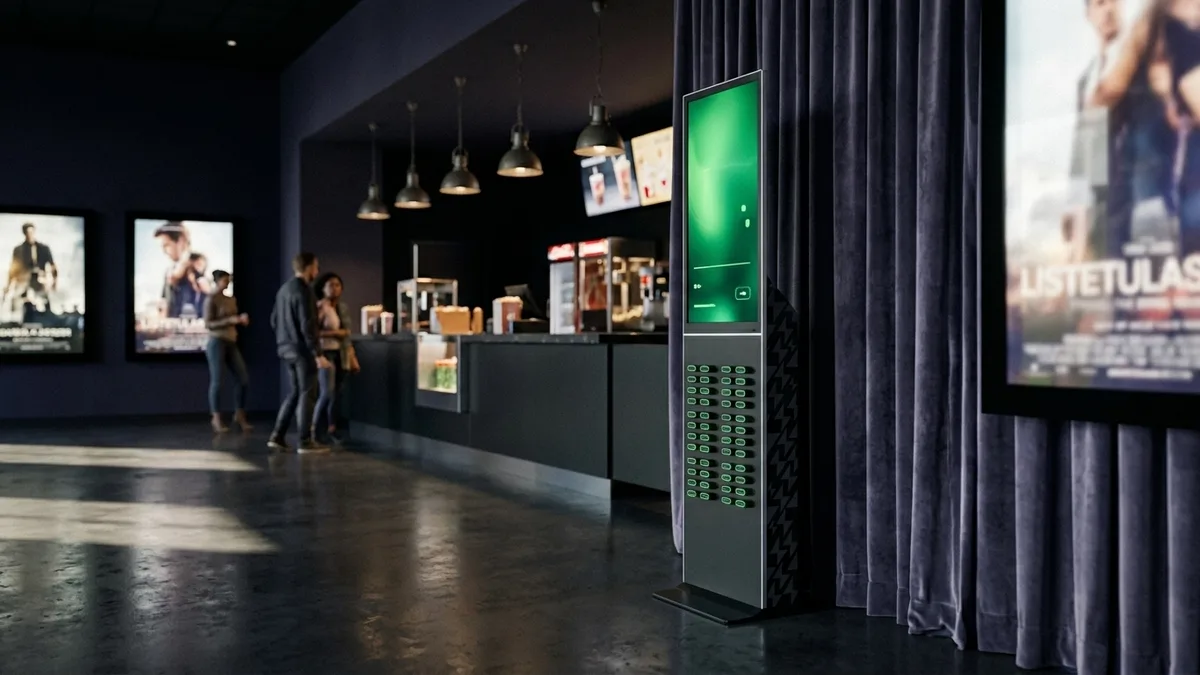
- The foyer and the box office are the natural spots for a station.
- The mass exit at the end of a screening is the real demand peak.
- In clubs and late-night venues audiences arrive already drained from the day.
The problem
Audiences arrive on a digital ticket and leave needing to book a ride, with hours of screening in between and nothing charging.
A station in the foyer or by the box office covers before and after the screening.
Benefits
What changes in your business
Digital tickets don't fail at the door
A QR code that can't be displayed is a hold-up on the door and a problem for your staff.
Audiences can get home
At the end everyone books a ride at once. With no battery, that becomes a problem at your exit.
It uses the wait beforehand
The stretch before the room opens is dead time the station turns into a service.
It suits a foyer
Foyers usually have floor space available and heavily concentrated circulation.
Use cases
- Multiplex cinemas with digital ticketing and back-to-back screenings.
- Theatres and concert halls with audiences arriving early.
- Clubs and late-night venues, where people arrive already low.
- Family entertainment centres with visits lasting several hours.
A screening creates a charging gap
Two hours of film or performance is two hours where nobody plugs anything in. And the audience arrived after a full day of use. The result is predictable: when it ends, a good share of the room walks out in the red, all at once.
That exact moment — the exit — is when the phone is needed most: booking a ride, finding the rest of the group, paying for parking.
The foyer works twice
The foyer is the one space an audience crosses twice, on the way in and on the way out. A station there is available during the wait beforehand and again at the exit peak.
Late-night venues
In clubs and late bars the starting point is already poor: people arrive at night with whatever the day left them. There the station doesn't extend a charge so much as replace it.
Frequently asked questions
Where should it go in a cinema?
In the foyer, near the box office or the concession stand — the space audiences cross both entering and leaving.
Is the peak before or after the screening?
After. The exit concentrates demand because everyone books transport at the same time.
Does it work for a club?
Yes, and it's usually a clear case because audiences arrive at night already low on charge.
Add a station to the foyer
Tell us your seating capacity and how many screenings you run a day.